Art tools
Day one had no art files at all, because Claude drew everything in code. This morning I tagged 0.2.0, and between those two points the game has used PixelLab, Sprite Fusion, Retro Diffusion and three paid tile packs, in that order. Claude ran PixelLab through its API. I run Sprite Fusion and Retro Diffusion in my browser, and Claude cleans up what I bring back.
PixelLab
My PixelLab plan started on September 30 (2,000 generations a month). Claude ran the first art pass through its API, 963 generations for 165 options across 98 assets, and I went through them. The tilesets and props were good. The animation was not: bodies, hair and clothes changed from frame to frame, and the battle moves did not read as moves. By the end of that day the figures were traced from the PixelLab picks I liked and animated in code, and the tilesets and props stayed as PixelLab images.
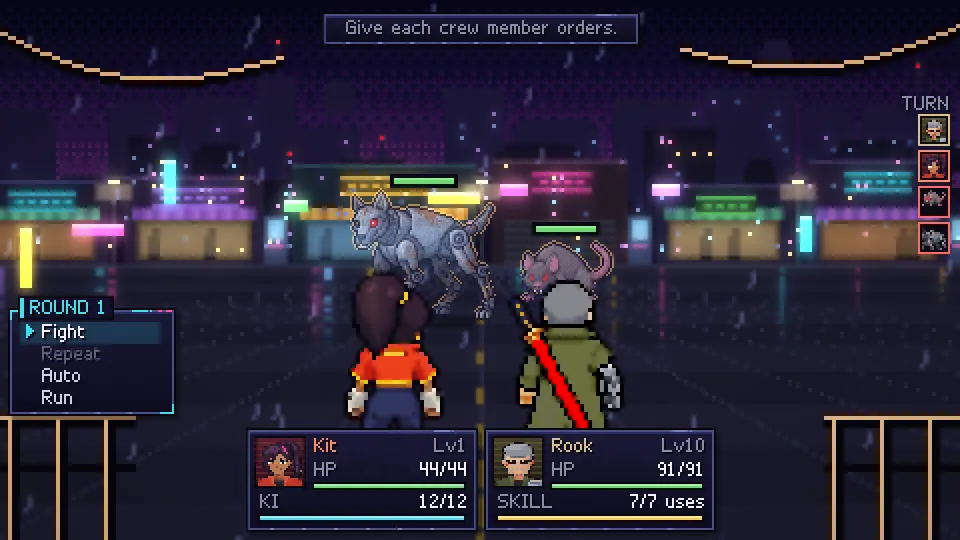
PixelLab has been out since the 15th. Sprite Fusion looked better and was cheaper. The plan itself runs until about October 30.
Sprite Fusion
When Claude’s plan capped the Sprite Fusion credits at 75 (each call costs 15, so five calls), I answered with option B and a condition: “I want to be the one driving Sprite Fusion. Agents should work with me to tell me what they want, give me prompts to use when needed, but I make the final call.” My own tests had already shown where it works. Idle and walk loops come out consistent, and a sword swing is better as one pose I like plus hand-edited frames. The 8-direction set comes out at different scales with details that change from one direction to the next. Those idle sheets are in the battle now.
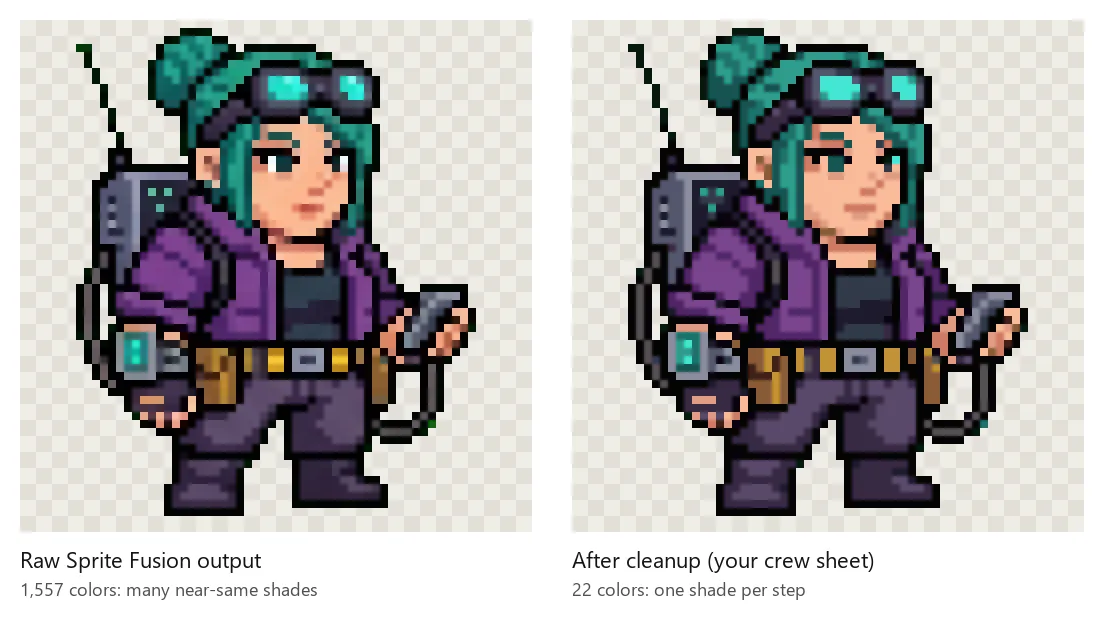
Decision #109 asked me to approve one style rulebook for all the 2D art, and I asked for pictures first. They were Hex’s sheet raw, with 1,557 colors, next to the cleaned one, with 22.
Retro Diffusion
The facings were the gap. Sprite Fusion gave me the crew facing right for battle, the field needs four facings, and its 8-direction sets drift in scale and detail. So on the 17th Claude started building a pipeline in code to make the facings, with graders scoring each round. On the 18th I paused it. Four rounds of our own builds had peaked at 7 out of 10 against a line of 8, and the first Retro Diffusion results looked promising. Claude had mentioned it as a similar platform. Its Rotate tool makes 8 views from one picture for $0.10. The Rook it made kept his face, arm and sword across views, which the Sprite Fusion set had not.
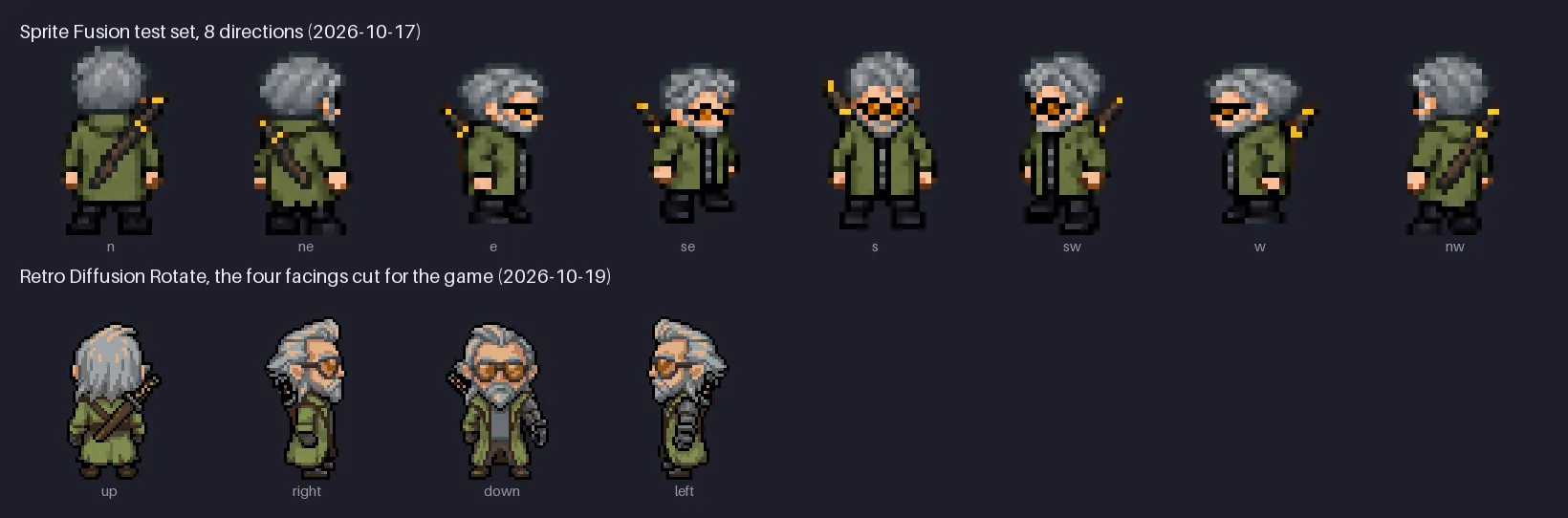
Claude shrinks each Retro Diffusion frame to field size, locks the palette to 28 colors and fixes stray pixels. All four crew had walks by the evening of the 19th, at about $0.66 each by its prices, and on the 21st they became the default field art. Its tilesets did worse. They have soft edges and no straight curb, and the paving came out as small identical tiles, bathroom tiles, where a real slab covers several.
The packs
For the ground I mocked several packs from itch.io with the crew at true scale. Two looked wrong, the crew stood out badly and the scale was off. On the 19th I picked WinLu, 48 px art in the RPG Maker MV format, and bought the exterior, interior and spaceship packs. It shows at 24 px a tile (32 looked all wrong). The license allows use and edits but not redistribution. I made the repo private that day, and the pack files are committed to it.
Claude built the art layer that night. The next morning I dropped the palette snap: “keep the WinLu pack colors, drop the palette snap.” By the 22nd, Lantern Row, its nine interiors and the five other maps were all in pack art. That day I approved the look of the Annex, the Sinkline and the world map from pictures.
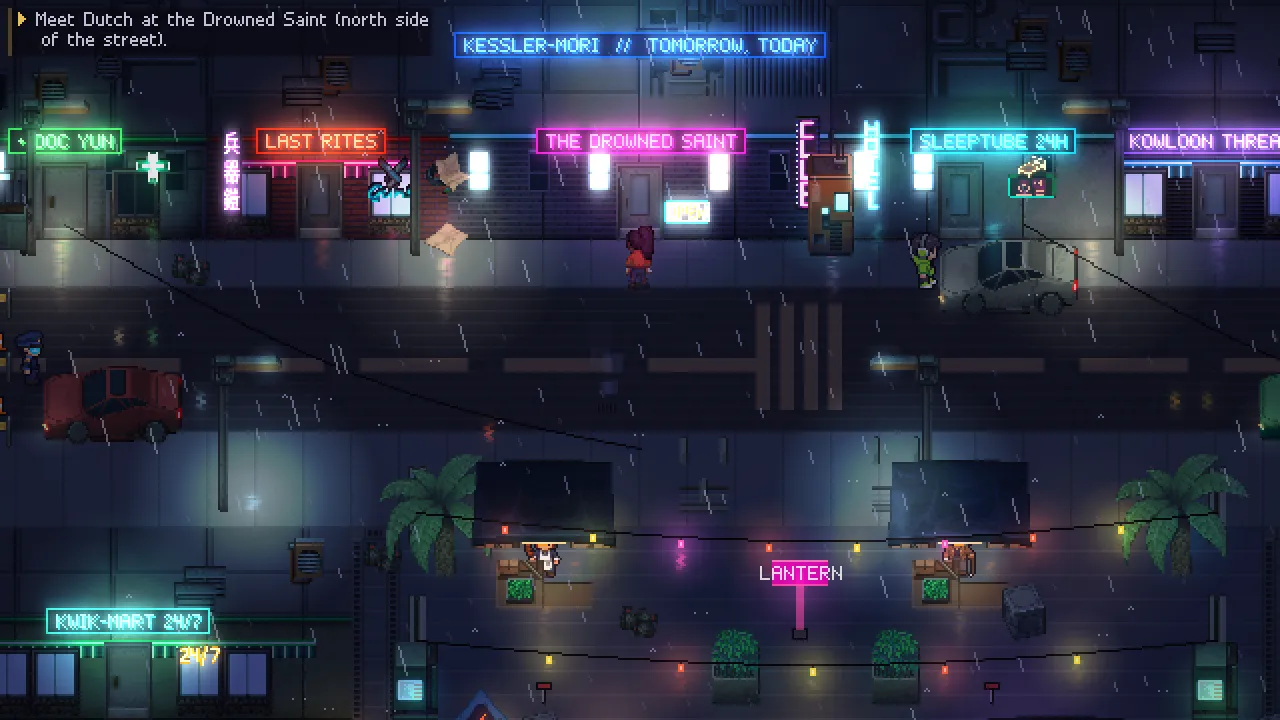
So today the field crew is Retro Diffusion, the ground and buildings are WinLu, the battle crew is Sprite Fusion, and the NPCs are still code-drawn figures traced from PixelLab picks.